Unlock Your God-Given Potential
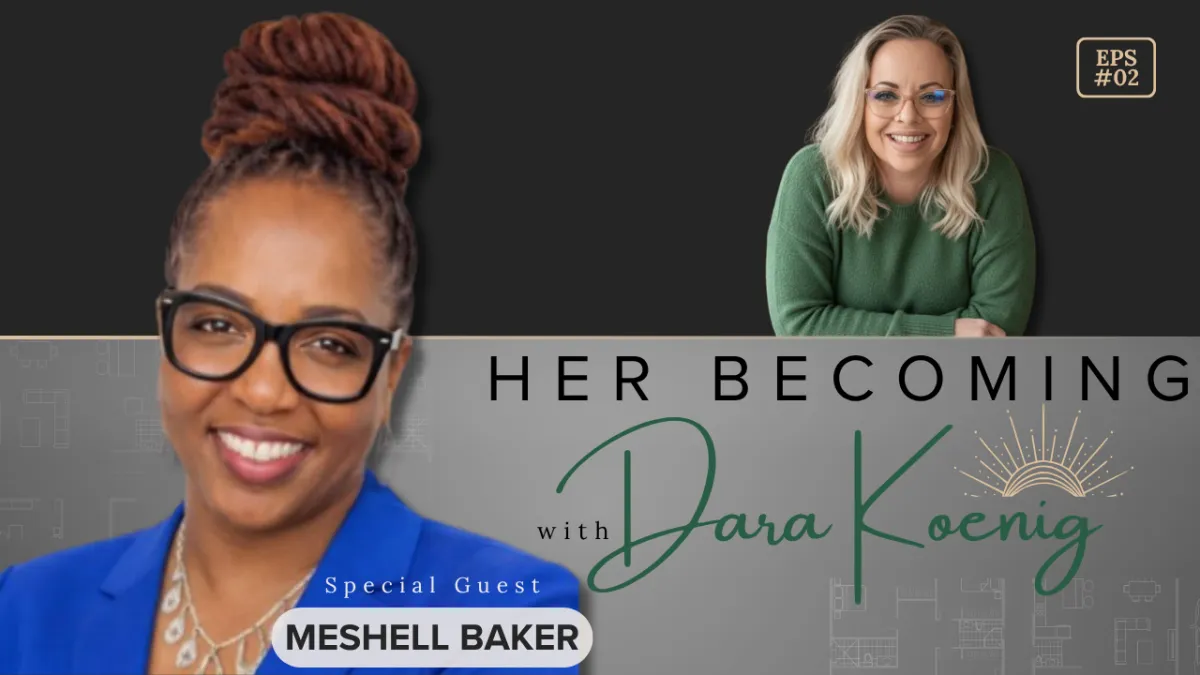
Her Becoming: Meshell Baker
On Identity, Belief, and the Discipline of Becoming
Some conversations refuse to end. They follow you into the kitchen, into the quiet of the morning, into the space between sleep and waking, where the most honest thoughts tend to surface.
My first conversation with Meshell Baker, Chief Confidence Igniter, was exactly that kind of conversation. And when I sat back down across from her for Her Becoming, I knew almost immediately that this one would go even deeper.
We had covered the foundation of confidence and change in our first interview for Women In Automotive. But what we had not explored, what I kept turning over in my mind afterward, was what that actually looks like when it is lived. Not in theory. Not in a framework. But in real life, on the hard days, in the quiet of a morning before the world has a chance to remind you of everything you have not figured out yet.
That is where this conversation began. And it went somewhere neither of us fully expected.
Confidence Isn't What You Think It Is
Before we could talk about the daily practice of confidence, Meshell did what she always does. She reframed the whole thing.
“Confidence is always misconstrued as being positive,” she said. “It’s just a belief. That something is going to transpire or happen. So you could actually believe things are not going to work out in your favor. You could have a confidence in doom and gloom.”
Let that settle for a moment.
Every single one of us wakes up confident in something. The question Meshell is asking, the one that deserves to sit with you a little longer, is this: what are you confident in? Have you been directing that belief toward your favor, or has it been quietly working against you this whole time?
“You do believe in something,” she said simply. “Have you been believing that it will work out favorably? That’s what most people are unaware of.”
It is one of those truths that feels too plain to be profound, until you realize you have spent years believing the wrong things with absolute conviction.
The Foundation: Identity Is Everything
If confidence is belief, then identity is the soil it grows in. And for Meshell, understanding that required going all the way back to the beginning.
Research tells us that our core identity, our fundamental belief system, the lens through which we interpret the world, is largely formed by the time we are seven or eight years old. Meshell doesn't shy away from that truth. She lives it.
She was raised in the shadow of a history that demanded silence. Her father was the son of a sharecropper, raised in the Jim Crow South, where being quiet was survival. Being unseen was safety. Getting a steady job was the ceiling of what was possible, and staying within it was wisdom, not limitation.
But inside of Meshell was something that didn't fit that story. A hunger. A desire. A voice that kept saying there has to be more than this. And when the world you were raised in doesn't have language for that, doesn't have permission for it, the result is an internal war that shows up on the outside as confusion, as shame, as choices that don't reflect who you really are.
“I felt like something was wrong with me,” she told me. “I ended up getting in trouble at an early age, incarcerated by the time I was 20. Then I carried shame on top of the other feelings. And I tried to overwork. If I could accomplish, achieve, acquire, obtain all these things, then it would make it go away.”
But it didn't. It never does.
That's the thing about identity. You don't outperform it. You live from it. And until the belief at the root changes, the fruit keeps telling the same story.
The journey she describes, from what is wrong with me to how do I fix myself to who am I becoming, is not a straight line. It is a slow, layered process of shedding identities, each one bringing her closer to the truth beneath. As she shared that, I found myself reflecting on my own journey and how different my life looks today from the woman I once was, and how impossible it would have felt back then to imagine this version of me.
When your identity has not caught up yet, the life you are meant for can feel completely out of reach.
The Turning Point: From Goals to Vision
In 2013, Meshell was, by every external measure, succeeding. She was a biotech sales executive managing a ten-state territory, traveling eighty percent of the time and carrying the full weight of being the primary caregiver for her disabled sister. She was doing everything right. And she was miserable.
Then one morning, standing in her kitchen, she heard something from deep in her spirit. A question from God… "What are you gonna do with her now?" And in that moment everything shifted. She said yes to bringing her sister into her care. And as a result of that yes, she found herself at a networking event for entrepreneurial businesswomen, listening to a presentation that would quietly rewrite everything.
The topic was goals versus vision.
"I realized I had been living my life chasing goals," Meshell told me. "Milestones, acquisitions, achievements, president's trophies, buying a house, all the things we are told we ought to, need to, should have to do. And I was still miserable. I was still empty. Because once I'd get it, it would be like, what next?"
Goals, she goes on to explain, are external milestones. You reach them, you check the box, and then you feel the hollow echo of and now what? Vision is something altogether different. Vision is about becoming; deciding who you are, not just what you will accomplish.
"I realized I had never decided who I wanted to become."
That sentence carries everything. Because how do you become her if you can't identify her? How do you build a life around a woman you've never had the courage to imagine?
Legacy Is Not What You Leave — It's How You Live
Legacy was a word that kept returning in our conversation, and I wanted to know what it actually meant to Meshell; not the version that gets embossed on plaques, but the one she's built her entire life's work around.
"Legacy is something that you live," she said. "It's how you live every day."
She shared a story about a colleague she had worked with for over twenty years. This colleague would walk into medical offices where Meshell had not been present in decades, and people would still light up at the mention of her name. They would ask about her, remember her, and speak about her with energy and admiration.
That is legacy. Not a title, not a memoir, and not what is said at a podium. It is the lasting impact of how you show up in people’s lives and the way they carry that experience forward long after the moment has passed.
“Every person that I encounter,” Meshell said, “I have the opportunity to leave them with something that will forever change them.”
That perspective shifts everything. It removes the distance we often place on legacy and brings it into the present, into the everyday interactions we have without always recognizing their significance.
The Truth About Leadership
One of the most clarifying moments of our conversation came when I asked Meshell how a woman knows when she's leading from her true identity; not from the need to prove herself, not from the exhausting performance of having it all together.
She didn't hesitate.
"Take a poll. So many people are scared to ask, ‘if you had to describe me, what would you say?’"
She described a simple exercise where colleagues wrote down words to describe one another. When she read what had been written about her, she did not like it. Most of us would not. But instead of rejecting it, she allowed it to become a point of reflection.
She had people around her who could help her process that feedback and redirect the conversation to what actually mattered. Who do you want to be?
Insecurity in leadership often shows up quietly. It appears in environments where everyone agrees, where mistakes are hidden, and where innovation is stifled before it has the chance to develop. As she put it, “If all you hear is yes, you’re not a leader, you’re a manager.”
Strong leadership, on the other hand, creates safety. It allows people to bring forward problems early, to ask questions, and to remain engaged even when conversations are difficult. That kind of environment is not created through strategy alone. It is built from identity.
The Daily Practice of Becoming
All of this, belief, identity, vision, and legacy, is not formed in isolated moments. It is built in the small, consistent decisions made every day.
Meshell’s mornings are non negotiable, not because of discipline alone, but because the practice has become part of who she is. She describes it as a devotion. Before email, before the calendar, and before social media introduces comparison or pressure, she chooses to center herself.
"Most people wake up and immediately go into overwhelm, inadequacy, insecurity," she said. "So that's the tone you set for yourself. That's what you carry throughout the day."
Instead, she begins by going inward. Reminding herself who she is. Whose she is. Setting an expectation that something incredible is going to show up today — even if incredible turns out to be a moment of pure, helpless laughter with her sister.
She calls her framework MASTER; a morning practice of meditation, affirmation, screening (visualization), transcribing (journaling), exercise, and reading. And she teaches her clients to begin with just fifteen minutes.
“Fifteen minutes is less than 0.3% of your day. If you’re not willing to give yourself fifteen minutes in the morning, stop saying you want a better life.”
It is a direct statement, but one rooted in truth.
Returning When You Drift
Even with intentional practice, there will be moments when old patterns return. Thoughts creep in, reactions happen, and the progress you have made feels distant.
The difference is not in avoiding those moments, but in how you respond to them.
Meshell returns to simple practices such as breathing, stillness, and reflection. She allows herself space to reconnect with her purpose and her legacy. Through that process, she finds her way back.
“The goal isn’t perfection,” she said. “It’s return.”
Belief Before Discipline
Near the end of our conversation, I asked her the question I'd been holding: in leadership, what matters more, belief, or discipline?
She laughed. Genuinely, like I'd asked her to pick a favorite child.
"Without belief, you will not be disciplined. And discipline is what anchors and expands your belief."
But when pressed, she chose belief. Because belief is the spark. It's the whisper that starts before you have a plan, before you have a method, before you've earned the right to be certain. "The voice of belief," she said, "not the voice of discipline" that is what moves first. Discipline is what makes the vision real. But vision is what makes discipline possible.
For the Woman Who Knows She's Meant for More
When I asked Meshell to speak directly to the woman listening/reading this right now, the one who knows, deep in her spirit, that she was made for something more, but can't seem to find her way out of the stuck, she didn't give a program. She gave a truth.
"You won't get there on your own. You already know that. You can't build what you don't know. The best investment in life is always yourself."
This wasn’t presented as a sales pitch but given as a lifeline. As someone who learned it the long, hard way, who came up without a mentor, who carried an identity she didn't deserve, who discovered somewhere in the wreckage of striving that becoming is not an arrival. It is a daily, faithful, courageous choice.
And that, really, is what Her Becoming is all about.
Not perfection. Not having it figured out. Not arriving.
Just this — the quiet, relentless, holy work of deciding, every single day, who you are becoming.
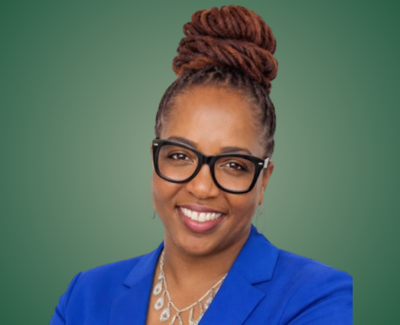
Connect with Meshell Baker and explore her work at meshellbaker.com or to book a complimentary 15-minute call with Meshell. Additionally Meshell has shared her MASTER Your Mornings Resource with you! Get it today and take control of your life starting with your morning.